
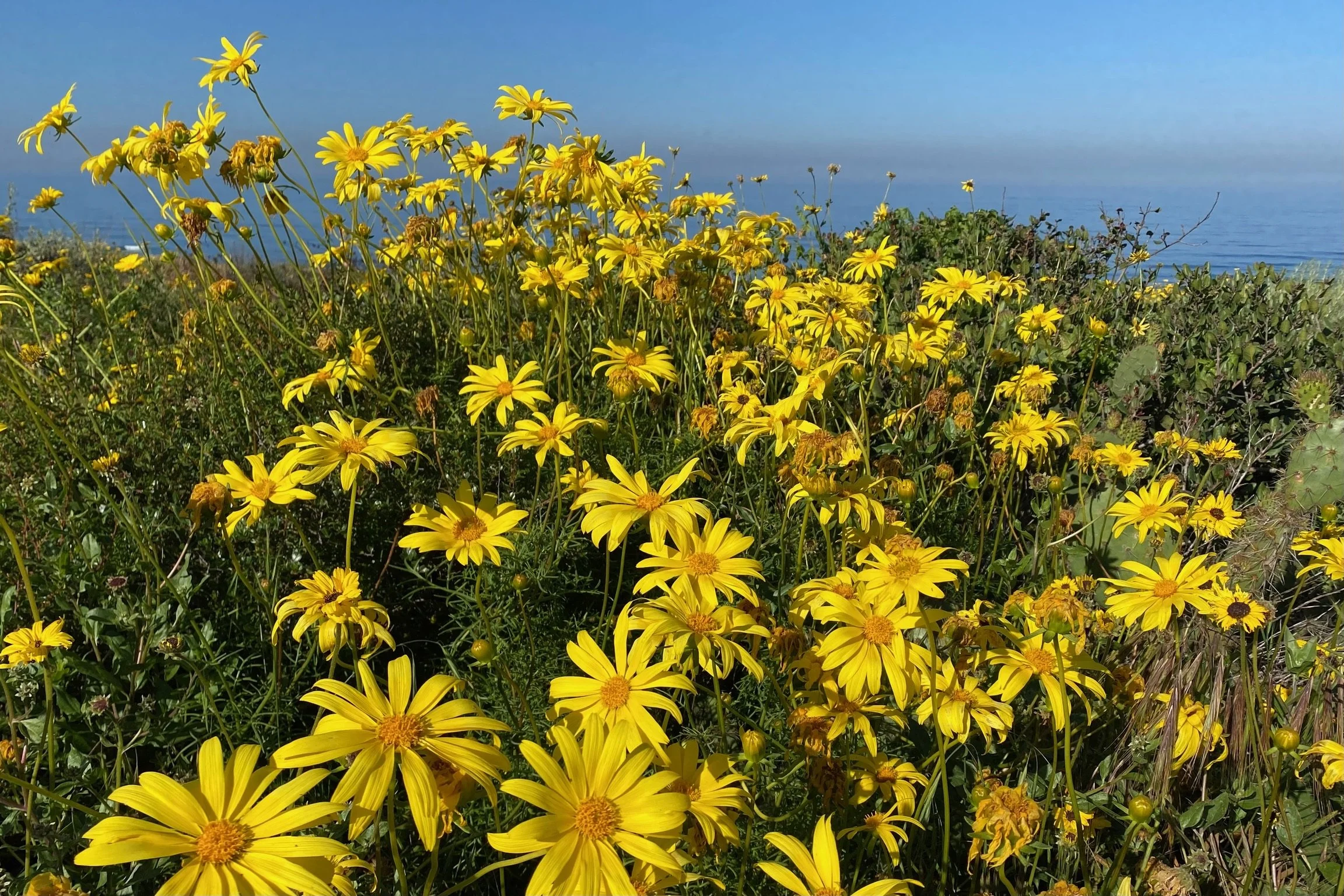
Plants of Sunset Cliffs Park
The Cliffs support a wide variety of native plants in the coastal sage scrub and maritime scrub habitats.
Featured Plants
Coastal Sagebrush (Artemisia californica)
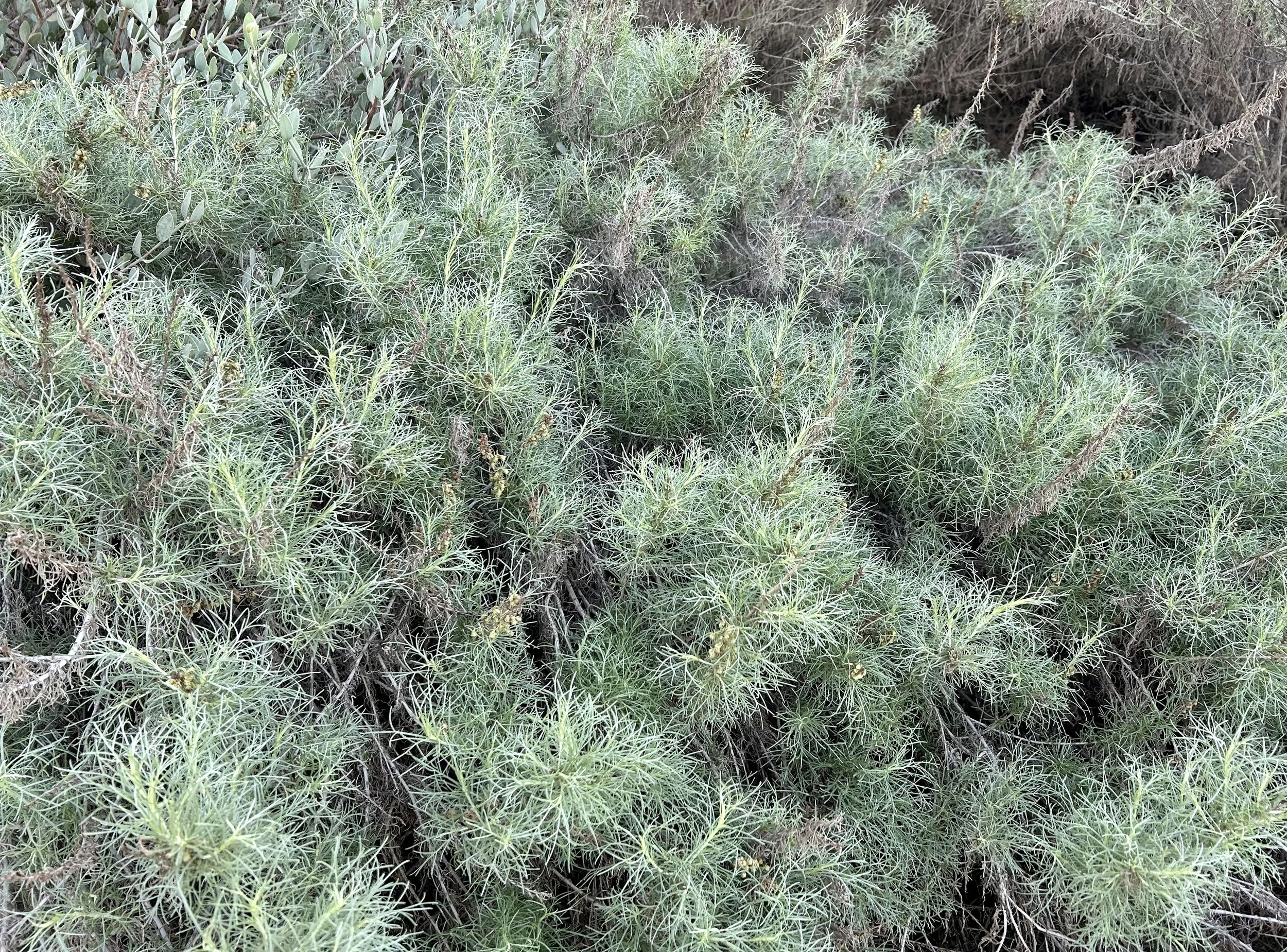
It's a member of the sunflower family, but its late blooming flowers are anything but daisy-like.
What distinguishes it is the characteristic aroma of its thin, threadlike silvery-green leaves; fragrant, due to essential oils which deter pests and may cause itching on your skin - don't eat the leaves! And don't confuse it with Sage; they're both fragrant, but not related.
We've got Sagebrush, acres of it, at home in Artemisia acres.
Bladderpod (Cleomella arborea, formerly Peritoma arborea)
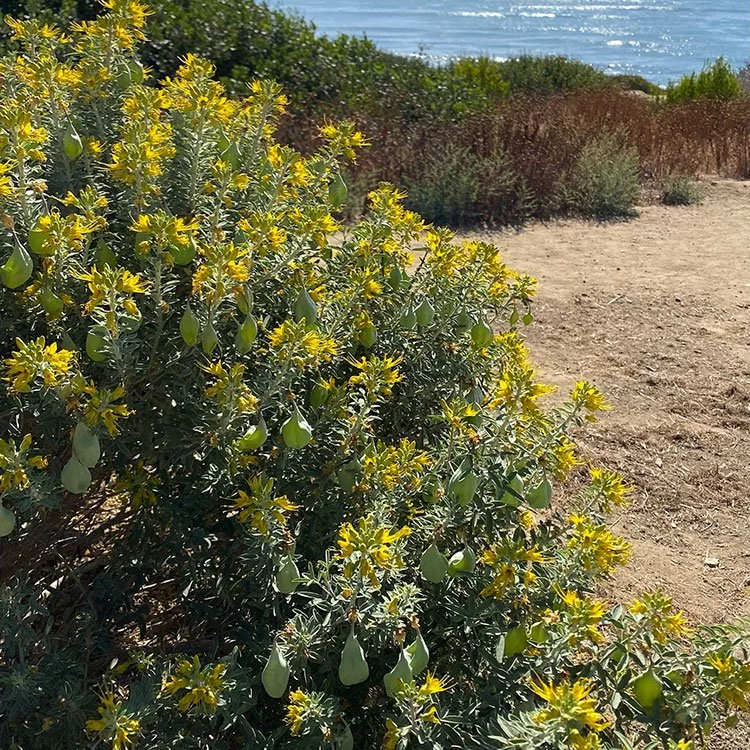
A very fast-growing densely-branching shrub with abundant bright-yellow flower clusters at the ends of its stem branches. It can grow to 1 ½ – to 6 ½ -feet tall and 6 feet wide. The fruit is a large, papery, lantern-like capsule that is smooth and green when new, aging to light brown. This is the “bladderpod” for which the plant is named. A typical flower cluster bears a number of unopened flower buds at its tip, open flowers, and maturing fruits. The leaves are light green. The flowers stay on the plant most of the year and are highly fragrant, though opinion is divided on whether the scent is pleasant or unpleasant.
The plant produces bright yellow flowers nearly year-round and is adapted to arid environments and tolerates dry soil and conditions.
Black sage (Salvia mellifera)
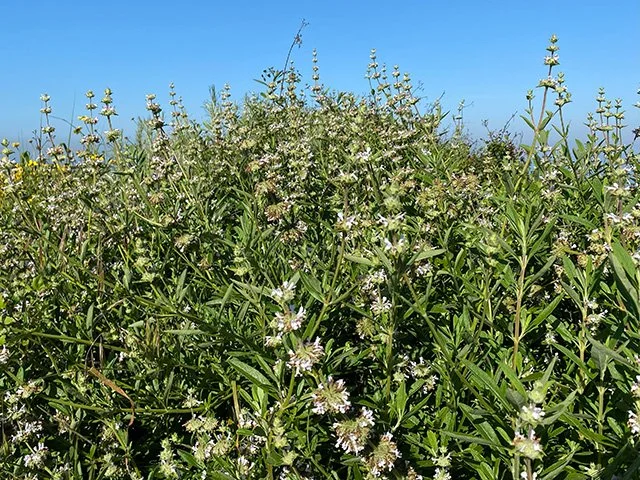
Californian black sage is a perennial shrub The flowers are usually a pale blue or lavender color, and rarely a pale rose color. blooms from March to June usually, attracting native bees, butterflies, and hummingbirds. These interactions play a vital role in pollination networks.
They grow on a variety of different soils, including sandstone, shale, granite, serpentinite, and gabbro or basalt. It is semi-deciduous, depending on the location and severity of drought, shallow rooted, and drought tolerant by leaf curling rather than drought-avoiding through leaf drop.
Lemonade Berry (Rhus integrifolia), also known as Lemonadeberry,
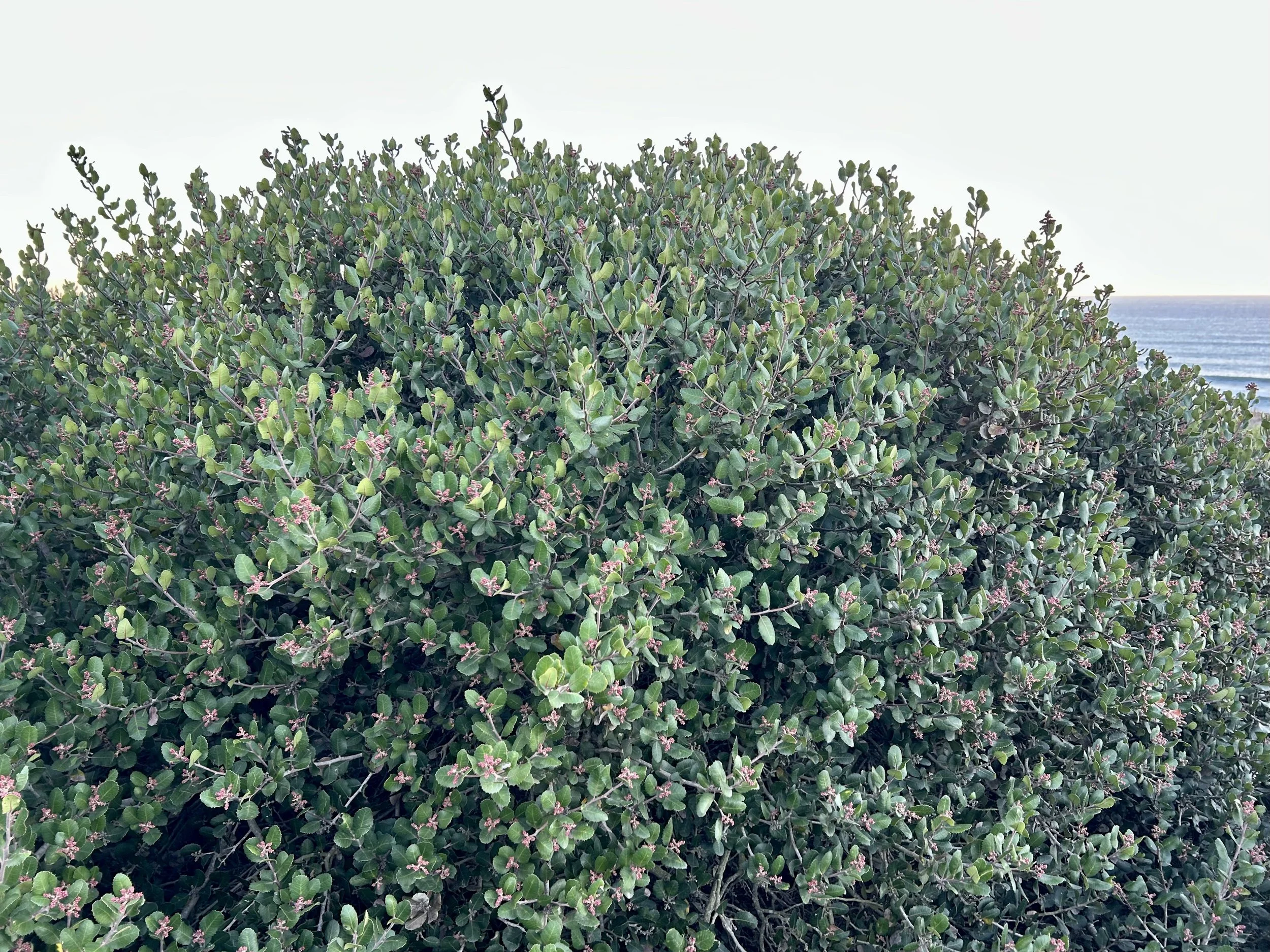
The small flowers are only six millimeters across. The ovary is superior and usually has a single ovule; although in pistillate flowers, the stamens are small and infertile.
The mature fruit of Rhus integrifolia is sticky, reddish, covered with hairs, and about seven to ten millimeters in diameter. The elliptical fruit presents tight clusters at the very ends of twigs.
Young plants manifest smooth reddish bark, while more mature individuals have cracked, even scaly, grayish bark with the smooth red bark displayed underneath.A mature plant is large and thicket-like with a sprawling arrangement.
The Lemonadeberry occurs in both chaparral and coastal sage scrub communities.
This plant thrives on well-drained soils and endures heat and windy conditions well. The species tolerates sandy as well as medium loam soils, and it can even thrive in nutrient deficient soil.
“They say” the little berries can be used to make lemonade flavored drinks. But we don't know anyone who's actually tried it.
Common Plants in Sunset Cliffs Natural Park
Shrubs
Coastal Sagebrush | Lemonade Berry | Black Sage | California Buckwheat | Box Thorn | Bladderpod | Bush Sunflower | San Diego Goldenbush | Toyon | Cliff Spurge | California Saltbush | Shaw’s Agave | Chamise | Laurel Sumac | Wart-stem Ceanothus
Perennials
San Diego Sea Dahlia | Salt Heliotrope | Saltgrass | Lance-leaf Dudleya
Cactus
Coast Cholla
This Native Plants page is in progress, please check back for additional content.